Digital marketing for dental practices has moved from an optional extra to the primary driver of new patient acquisition. The shift happened gradually, then all at once: patients who once relied on word-of-mouth and Yellow Pages listings now spend several minutes researching a practice online before ever making contact. They read reviews, browse the website on their phone, check the Google Business Profile, watch a team video, and form a detailed impression — all before a single conversation with your front desk.
Understanding how these channels work, how they connect, and where to invest first is the difference between a dental practice that grows predictably and one that depends on word-of-mouth and hopes for the best. This guide covers every major digital marketing channel for dental practices and how they fit together as a system.
Local SEO and Google Business Profile
For most dental practices, local search is the highest-volume acquisition channel available. When someone searches "dentist near me" or "dental implants [city]," the three practices that appear in the Google Maps pack receive the majority of clicks — ahead of paid ads, ahead of organic listings, ahead of everything else.

Local SEO works across two layers. The first is your Google Business Profile: a complete, actively managed profile with accurate categories, a keyword-rich description, current hours, high-quality photos, and a steady stream of genuine reviews. The second is your website's local relevance signals: location-specific landing pages, consistent NAP data, LocalBusiness schema markup, and content that addresses the search intent of patients in your specific market.
In 2026, local SEO has an additional dimension: Google's AI Overviews now appear for many local healthcare searches, synthesising information from GBP data, reviews, and structured website content. Practices with complete profiles and well-implemented schema are significantly more likely to appear in these AI-generated answers — an increasingly important source of first impressions for prospective patients.
Your Website: The Foundation Everything Else Feeds
Every other digital marketing channel — SEO, paid ads, social media, email — ultimately directs traffic to your website. A website that loads slowly, is hard to navigate on a phone, or doesn't clearly communicate why a patient should choose you wastes every dollar spent on every other channel.
The non-negotiables in 2026: mobile-first design (the majority of dental searches happen on phones), sub-three-second load time and strong Core Web Vitals scores, a single clear call to action above the fold on every page, and copy that speaks to patient concerns rather than clinical procedures. A page that explains what a dental implant consultation feels like will consistently outperform a page that lists implant specifications.
Online booking or a frictionless contact form should be accessible from every page — removing the phone call as the only conversion option meaningfully increases the number of patients who complete first contact.

Paid Search: Google Ads
Google Ads (search campaigns) allow you to appear at the top of results pages for high-intent searches — "emergency dentist," "Invisalign consultation," "dental implants cost" — immediately, without waiting for organic rankings to build. This makes paid search uniquely valuable for new practices or practices launching new services.
The economics of dental Google Ads are straightforward: cost per click in dental markets is high ($8–$25+ depending on service and market), but the lifetime value of a new patient is also high. A well-structured campaign that targets the right keywords, sends traffic to service-specific landing pages, and tracks conversions accurately can produce a strong return. The keyword in "well-structured" is doing significant work here — poorly managed dental ads campaigns with broad keyword targeting and generic homepage destinations routinely waste budget without producing meaningful patient volume.
Social Media
Social media for dental practices serves a different function than search — it builds familiarity and trust with people who aren't currently looking for a dentist, so that when they need one, your practice is already familiar. This distinction matters for how you measure it: social media ROI is rarely direct and immediate; it's the practice that was already in a patient's mind when they decided to look.
The formats that work best in 2026: short-form vertical video (Reels) for reach, educational carousels for saves and shares, patient testimonial content for conversion intent, and team and culture content for the warmth and familiarity that turns followers into patients. Posting three to four times a week on one or two platforms consistently outperforms bursts of daily posting followed by long silences.
Email Marketing and Patient Retention
Email marketing is the highest-ROI retention channel for dental practices — and retention is almost always more profitable than acquisition. A monthly newsletter, automated appointment reminders, post-treatment follow-ups, and targeted reactivation sequences for lapsed patients can recover a meaningful percentage of the patient base that silently drifts away each year.
The practices with the lowest patient attrition rates don't just send reminders — they send content patients actually want to read. A newsletter with a useful oral health tip, a brief team update, and something human about the practice earns a different kind of relationship than a series of booking prompts. That relationship is what keeps patients loyal when a competitor opens nearby or sends them a new-patient offer.
Video Content
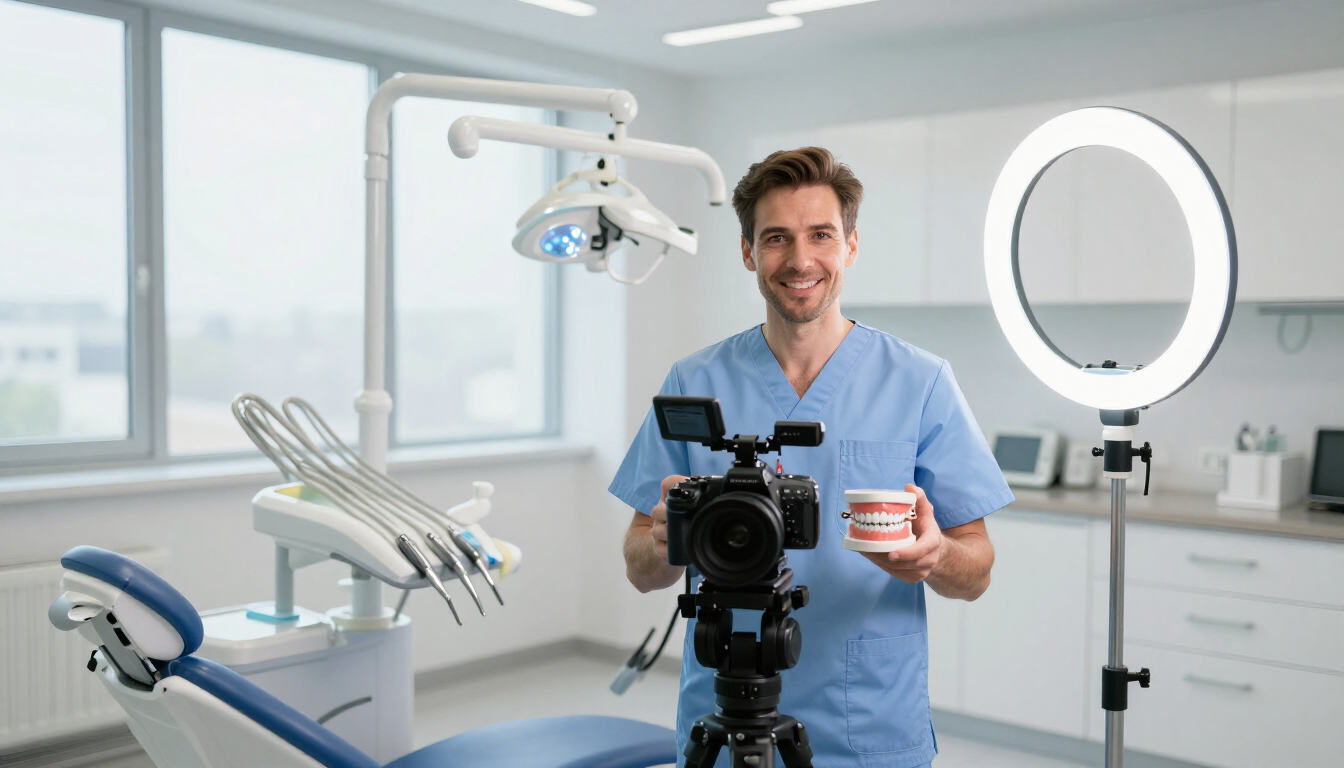
Video has become the dominant content format across every major platform, and dental practices that use it effectively have a significant advantage. The barrier to entry is lower than most practices assume: a modern smartphone and good natural light produce footage that performs well on social media. What matters is authenticity and usefulness, not production quality.
The highest-performing video types for dental practices: short procedure explanations (what to expect at a crown appointment, what Invisalign refinements feel like), patient testimonials recorded at the practice, team introductions that give prospective patients a sense of who they'll meet, and before-and-after case walkthroughs for cosmetic services. Video builds trust faster than any other content format because it's the closest available proxy to actually meeting your team before setting foot in the practice.
Reviews and Reputation Management
Online reviews are now a prerequisite for new patient acquisition, not a bonus. A practice with fewer than 50 reviews or an average below 4.5 stars will consistently lose to a competitor with stronger review signals — regardless of clinical quality. Patients cannot evaluate clinical skill before they've experienced your care, so they use reviews as the primary proxy for trustworthiness.
Building review volume requires a systematic, compliant process: ask at the right moment (immediately after a positive experience), make it frictionless (a direct link via SMS or email), and respond to every review within 48 hours. Beyond Google, monitor and maintain your presence on Healthgrades, RateMDs, and any platform specific to your market.
How the Channels Work Together
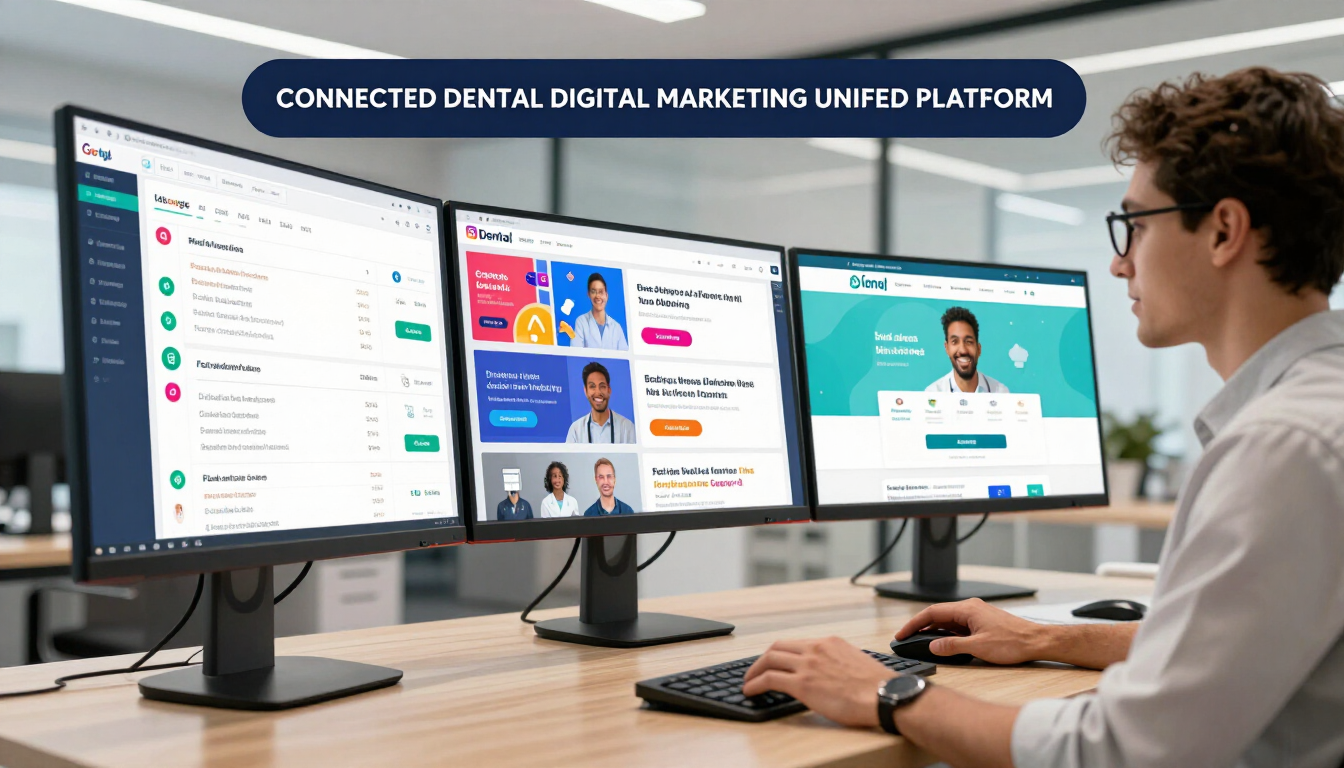
Digital marketing works best when channels reinforce each other rather than operating independently. Your website is the hub — everything else drives traffic to it or builds the trust that makes that traffic convert. Local SEO and paid search drive intent-based traffic. Social media builds familiarity with your future patients. Email retains your existing ones. Reviews validate your positioning to everyone who finds you through any channel.
The biggest strategic mistake dental practices make is treating each channel as a separate initiative rather than a connected system. A practice that improves its Google reviews sees better local SEO rankings. Better local rankings drive more website traffic. A better website converts more of that traffic. More patients mean more reviews. The compounding effect of a well-integrated digital marketing system is what separates consistently growing practices from ones that plateau.
Frequently Asked Questions
For most dental practices, local SEO — specifically Google Business Profile optimisation and map pack rankings — delivers the highest volume of high-intent prospective patients. When someone searches "dentist near me," they are ready to book; capturing that search is more valuable per dollar than any awareness channel. After local SEO, a well-converting website is the most important asset, because every other channel ultimately sends traffic there. For practices with budget for paid advertising, Google Ads on high-intent service keywords (implants, Invisalign, emergency dental) produces measurable new patient volume quickly.
A commonly used benchmark is 5–12% of gross annual revenue, with newer practices and those in competitive markets investing toward the higher end. More important than the total is the allocation: the highest-return investments are typically a well-built, fast website; consistent local SEO and GBP management; and a systematic review-building process — all of which are relatively low-cost. Paid search produces faster results but requires ongoing spend to maintain. Social media and email marketing are high-ROI when managed internally or with modest external support.
It depends on the channel. Google Ads can drive new patient inquiries within days. Social media engagement builds over weeks to months. Local SEO and organic search typically take six to twelve months to produce meaningful ranking improvements, though the results compound and become more durable over time. Email marketing to an existing patient list can show results within the first send. The mistake most practices make is expecting every channel to perform on the same timeline — a cohesive strategy invests in quick-return channels (paid search) to fund the practice while long-term channels (SEO, content, social) build momentum.
No — and trying to maintain an active presence on every platform is one of the most common causes of social media burnout for dental practices. Choose one or two platforms where your ideal patients actually spend time and be consistent there. For most dental practices, Instagram and Facebook are the highest-priority platforms; TikTok is worth adding once a content production rhythm is established. LinkedIn has limited value for patient acquisition. It is far better to post three times a week on Instagram for two years than to maintain accounts on five platforms for three months and then go quiet.