Acquiring a new dental patient costs five to seven times more than retaining an existing one. Yet most dental marketing budgets are weighted almost entirely toward new patient acquisition — Google Ads, SEO, social media ads — while the patient base already in the practice slowly erodes through inactivity, forgotten follow-ups, and the gradual drift of patients who simply never heard from you between appointments.
Email marketing is the highest-return retention tool available to a dental practice. It's direct, personal, inexpensive relative to paid advertising, and — when done well — builds the kind of trust and familiarity that keeps patients loyal for years and prompts them to refer friends and family without being asked. This guide covers not just the mechanics of dental email marketing, but the deeper principle behind retention: delivering genuine value to patients between appointments, not just reminders to book one.
Why Patients Drift Away (and What Stops It)
Most patient attrition isn't caused by a bad experience. It's caused by silence. A patient finishes treatment, leaves satisfied, and then hears nothing from your practice for six months. By the time their next hygiene appointment rolls around, life has intervened — they moved, changed insurance, got busy, or simply forgot which practice they used to go to. A competitor's ad reached them at the right moment, and that was that.

Consistent, relevant email communication closes this gap. It keeps your practice present in a patient's mind without requiring them to actively think about dental care. The practices with the highest retention rates aren't necessarily the ones with the best clinical reputation — they're the ones patients feel a genuine connection with. Email is the most scalable way to build and maintain that connection.
Beyond logistics, patients stay loyal to practices that make them feel seen and valued — not just as appointment slots, but as people. This means going beyond promotional emails and appointment reminders to deliver content that is actually useful: oral health guidance they'll apply in their daily lives, honest explanations of procedures they've been curious or anxious about, and the occasional glimpse into the people behind the practice.
The Email Types That Retain Patients
The monthly or bi-monthly newsletter. A consistent newsletter keeps your practice top of mind without feeling transactional. The most effective dental newsletters mix three types of content: one genuinely useful oral health tip, one piece of practice news (a new team member, a new service, an award), and one light human element (a team favourite recipe, a local event the practice is involved in). Patients who read your newsletter regularly feel like they know you — and patients who feel like they know you don't switch to a competitor because of a $50 new-patient offer.
Post-treatment follow-up emails. Sending a personal follow-up email one to two days after a significant procedure — a crown, an extraction, an orthodontic adjustment — is one of the highest-value touchpoints a practice can create. A simple "How are you feeling? Here's what to watch for over the next few days" message tells patients you care about their wellbeing beyond the appointment. It also preempts anxious calls or Google searches, and positions your practice as exceptionally attentive. Most practices don't do this, which makes it a genuine differentiator.
Appointment reminders and confirmation sequences. Automated reminders reduce no-shows and last-minute cancellations, but the language matters. Reminders that are warm and specific ("We're looking forward to seeing you on Thursday — here's what to expect") outperform generic system-generated messages in both open rate and patient perception. Consider including a short helpful note in each reminder: what to eat beforehand, how long to expect the appointment to take, where to park.

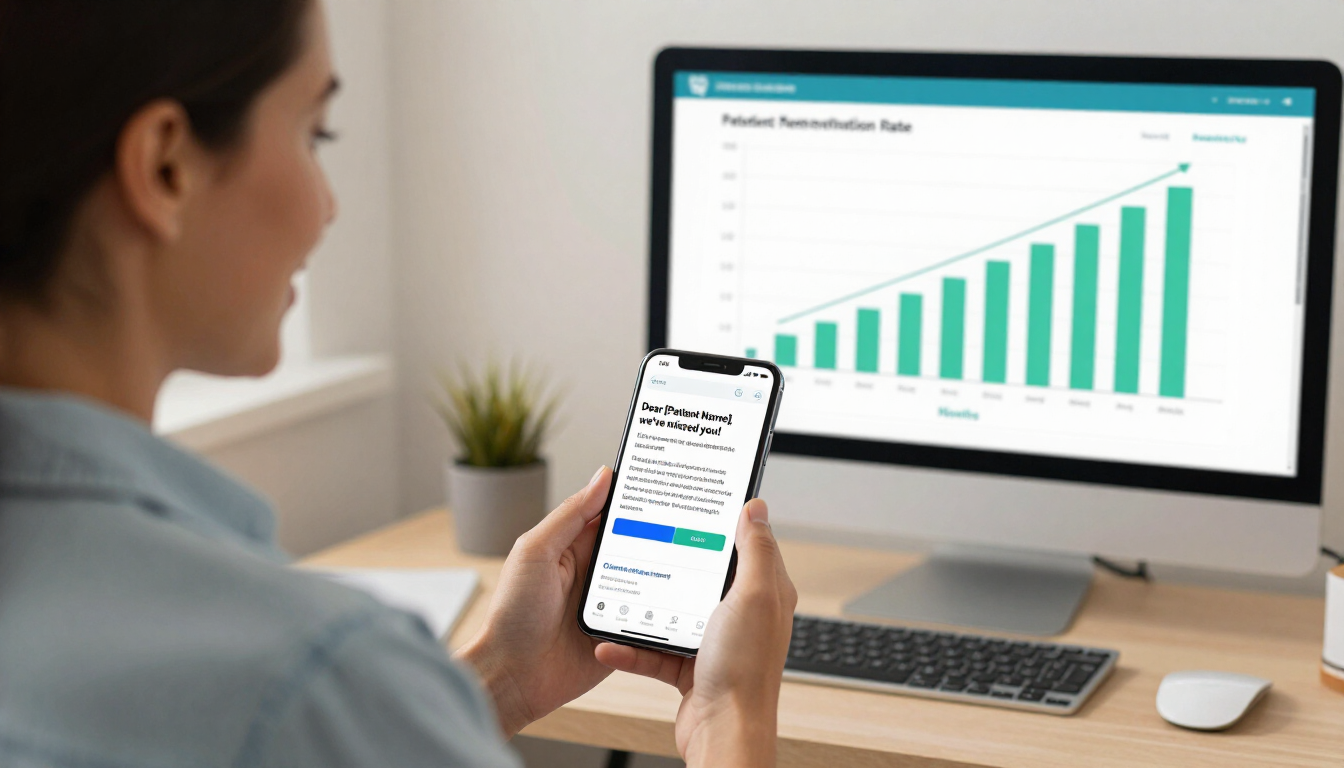
Reactivation campaigns for lapsed patients. Every practice has a segment of patients who haven't visited in 18 months or more. A targeted reactivation email sequence — two to three emails over four to six weeks — can recover a meaningful percentage of these patients at near-zero acquisition cost. The most effective reactivation emails don't lead with urgency or discounts; they lead with genuine care: "We noticed it's been a while since we've seen you. No pressure — we just want to make sure you're doing well and that we haven't dropped the ball."
Birthday and milestone emails. A simple birthday email — no offer required, just a warm note — has a consistently high open rate and generates goodwill disproportionate to the effort it takes to set up. Anniversary emails ("You've been a patient with us for five years — thank you") have a similar effect. These emails work because they demonstrate that your practice tracks and values individual patients, not just their appointment history.
Delivering Value Beyond Transactions
The practices with the strongest retention treat their patient relationships the way a trusted advisor treats a client — proactively sharing useful information, acknowledging life circumstances, and communicating with empathy rather than just efficiency. A few specific applications:
- Educational content that reduces anxiety. Dental anxiety affects a large proportion of the adult population. Email content that demystifies procedures, explains what sensations are normal, and walks patients through what to expect before an appointment reduces anxiety and increases treatment acceptance. Patients who understand their care are more engaged in their care.
- Transparency about costs and financial options. One of the most common reasons patients delay or avoid treatment is financial uncertainty. A brief email explaining your payment plan options, or clarifying how dental benefits work, removes a barrier that many patients are too embarrassed to ask about. Practices that communicate proactively about financial accessibility retain more patients across income levels.
- Acknowledging life events and showing genuine care. A patient who mentioned they were nervous about an upcoming procedure, or who shared that they were going through a difficult time — a follow-up that acknowledges this, however briefly, is remembered. This level of attentiveness is nearly impossible at scale without a system, but with a simple CRM note and a follow-up email template, it becomes part of your standard patient experience.
List Segmentation and Personalisation
Not every patient should receive the same email. Basic segmentation dramatically improves relevance and reduces unsubscribe rates:
- Segment by time since last visit: active patients (within 12 months), at-risk patients (12–24 months), lapsed patients (24+ months)
- Segment by treatment history: patients who have had cosmetic work, orthodontics, or implants have different interests and follow-up needs than hygiene-only patients
- Segment by family status: patients with children may benefit from separate content about paediatric care and family appointment scheduling
At minimum, your appointment reminder and reactivation sequences should be separate from your newsletter — patients on different journeys should not receive identical communications.
Frequency and Timing
For most dental practices, one email per month is the right cadence for newsletters — frequent enough to stay present, infrequent enough that patients don't disengage. Automated sequences (reminders, post-treatment follow-ups, reactivation) operate on their own schedules independently of your newsletter cadence. Tuesday through Thursday, mid-morning sends, consistently outperform Monday and Friday in open rates across healthcare email benchmarks.
Frequently Asked Questions
Email keeps your practice present in a patient's mind between appointments, which directly reduces the likelihood they'll drift to a competitor through simple inattention. Consistent, valuable emails — newsletters, post-treatment follow-ups, birthday messages, reactivation sequences — build a relationship that goes beyond the transactional, making patients feel genuinely connected to your practice. Patients who feel that connection are more likely to stay, refer, and accept recommended treatment than patients who only hear from you when they've missed an appointment.
The most effective retention emails deliver something genuinely useful: oral health tips patients will actually apply, honest explanations of procedures they're anxious or curious about, transparency about financial options, and the occasional personal glimpse into the practice and team. Post-treatment follow-up emails — checking in on how a patient is feeling after a significant procedure — are among the highest-impact retention touchpoints a practice can create, and most practices don't send them at all. Value-first content builds the kind of loyalty that appointment reminders alone never will.
A targeted reactivation email sequence of two to three emails sent over four to six weeks is the most effective approach. Lead with genuine care rather than urgency or discounts — something like "We noticed it's been a while and wanted to check in" outperforms "Your teeth need cleaning — book now." The second email can address a common barrier (financial options, flexible scheduling, anxiety about what might have changed). If a patient still doesn't respond after three emails, move them to a lower-frequency segment rather than continuing to email them at the same cadence.
Once a month is the right baseline for your newsletter. Automated sequences — appointment reminders, post-treatment follow-ups, reactivation emails — run on their own schedules and don't count toward your newsletter cadence. Be careful not to let the combined total of all email types exceed two to three emails per month for any individual patient; beyond that, unsubscribe rates climb. Segment your list so active patients, at-risk patients, and lapsed patients receive appropriately tailored content at appropriate frequencies.