TikTok is no longer an experimental channel for early-adopter brands. In 2026 it is a mainstream patient discovery platform — and dental practices that use it well are reaching prospective patients who would never have found them through Google, Instagram, or paid ads.
That said, TikTok for healthcare is not the same as TikTok for a clothing brand or a restaurant. There are real compliance considerations, privacy obligations, and professional reputation factors that any dental practice must think through before posting. This guide covers what works, what to avoid, how TikTok fits alongside Instagram Reels and YouTube Shorts, and how to build a realistic, sustainable TikTok presence in 2026.
Why TikTok Still Matters for Dental Practices in 2026
TikTok has over 1.5 billion monthly active users globally, with particularly strong penetration in the 18 to 44 age bracket — a demographic that represents a significant share of new dental patients, especially for cosmetic, orthodontic, and preventive care. Unlike Google search (where patients are actively looking) or Facebook (where they are passively scrolling through their existing network), TikTok's "For You Page" algorithm actively surfaces content to users who have never encountered your practice before, based on interest and engagement signals rather than follower counts.

This means a practice in Hamilton, Ontario with 200 TikTok followers can reach 40,000 local people with a single well-executed video. The organic reach ceiling on TikTok is significantly higher than on any other platform — and it is free. That equation makes it worth understanding even for practices that decide not to use it aggressively.
Privacy and Compliance: What Every Dental Practice Must Know First
Before posting a single video, dental practices must be clear on their obligations. Healthcare content on social media is governed in Canada by provincial regulatory bodies (the RCDSO in Ontario, for example) and in the United States by HIPAA and state dental board regulations. The core principles are consistent: patient privacy must be protected absolutely, clinical claims must be truthful and not misleading, and nothing that appears in content should identify or imply the identity of a patient without their explicit, documented, written consent.
In practical terms for TikTok, this means:
- Never film in clinical areas where other patients are present or visible, even incidentally in a background reflection or through a window.
- Never film a patient — before, during, or after treatment — without a signed video release that specifies exactly how the footage will be used, on which platforms, and for how long.
- Be careful with treatment footage. Even filming an empty chair with instruments visible can be misread as patient-facing content by regulators if the surrounding context implies a procedure was just completed.
- Avoid before-and-after content unless fully consented and clearly framed. In several Canadian provinces, comparative claims in dental advertising are regulated. Check your provincial regulatory guidelines before posting cosmetic results.
- Music licensing matters. TikTok's Commercial Music Library (available for business accounts) contains cleared music for brand use. Do not use trending sounds from the creator library on a business account — this creates copyright liability.
None of these constraints make TikTok off-limits. They simply define the lanes within which dental content operates — and those lanes are still wide enough to produce highly effective content.
Content Formats That Work for Dental Practices in 2026
Educational and myth-busting content
The highest-performing dental content on TikTok in 2026 is educational — short, confident, direct answers to the questions patients are already asking or the assumptions they hold that are wrong. "Why do my teeth hurt when I eat ice cream?" "Does whitening actually damage your enamel?" "How long do dental implants really last?" These videos require no patient involvement, no clinical footage, and no compliance complexity. They need a good hook in the first two seconds, a clear answer, and a credible, personable delivery to camera. They consistently rack up views and saves — and saves are one of TikTok's strongest signals for broader distribution.

Behind-the-scenes and team content
Content that shows the human side of a dental practice — the team preparing for the day, a quick tour of a newly renovated space, the front desk team doing something fun together — builds the trust and approachability that reduces patient anxiety before a first visit. This content is low-risk, requires no patient involvement, and generates genuine engagement from your existing patient base, which amplifies its reach through the algorithm.
Procedure explainers (without patients)
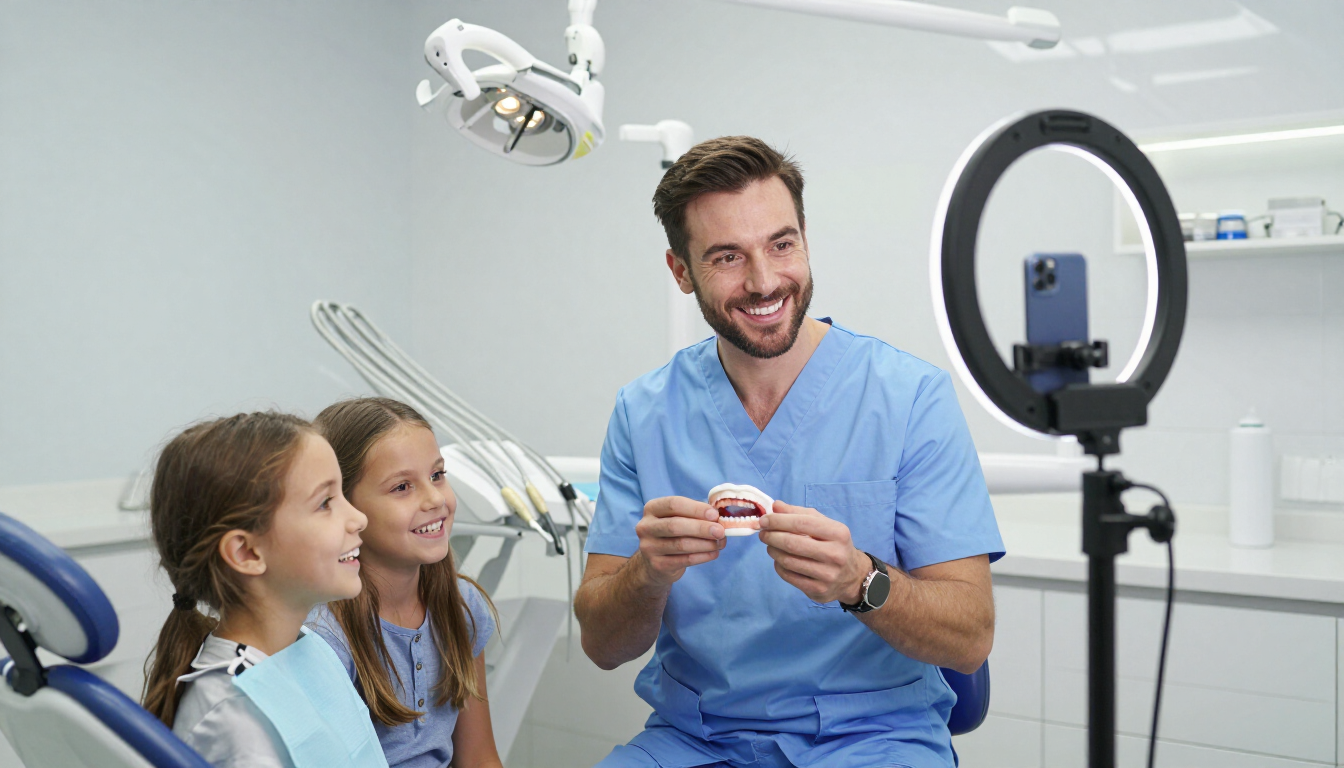
A 45 to 60 second walkthrough of what happens during a root canal, a same-day crown, or a dental implant consultation — delivered directly to camera by the treating dentist, using a model or diagram if needed — answers one of the most anxiety-producing questions patients have: "What is actually going to happen to me?" This content performs well because it is useful, it positions the dentist as knowledgeable and approachable, and it is entirely compliant when no real patients appear.
Trend participation (selectively)
TikTok's trending sounds, formats, and challenges can amplify reach significantly when used relevantly. The key word is relevantly — a dental practice jumping on a trending audio clip purely for views, without a clear connection to oral health or practice culture, looks forced and can undermine professional credibility. Participate in trends when there is a natural, genuine connection. Skip them when there is not.
Posting Frequency and Realistic Expectations
TikTok's algorithm rewards consistent posting. For dental practices in 2026, three to five posts per week is the ideal cadence — but only if the quality and thoughtfulness of the content can be maintained. Two well-executed, genuinely useful videos per week is significantly better than five rushed ones.
The most practical approach is batch filming: block one hour per month, film six to eight short videos back to back in a tidy, well-lit area of your practice, and schedule them across the month. With a simple content plan prepared in advance, one monthly session can sustain a consistent TikTok presence without disrupting daily operations.
TikTok does not yet have a widely used local business booking integration in most Canadian markets, though TikTok Shop and local business features continue to expand. The primary conversion pathway for dental practices remains driving traffic to your website or profile bio link — a link to your online booking page or a landing page for a specific service. Make sure that link is always current and mobile-optimised.
How TikTok Fits Alongside Instagram Reels and YouTube Shorts
The practical good news: content filmed vertically for TikTok can be posted simultaneously to Instagram Reels, Facebook Reels, and YouTube Shorts with minimal additional effort. All four platforms use the same 9:16 format and similar length parameters. This means one recording session produces assets for four channels.
There are minor platform-specific considerations: TikTok's algorithm slightly penalises videos that contain a visible TikTok watermark when cross-posted (use a tool like CapCut or a simple re-export to remove it), and YouTube Shorts has slightly different best practices for titles and hashtags. But the core content — the hook, the message, the delivery — works across all four.
The strategic difference between the platforms: TikTok offers the highest potential organic reach to new audiences; Instagram Reels reaches your existing followers more reliably and tends to perform better for cosmetic and visual content; YouTube Shorts contributes to your practice's YouTube presence and long-term SEO; Facebook Reels reaches an older demographic. Running content across all four simultaneously is the highest-leverage use of the same content investment.
Is TikTok Right for Every Dental Practice?
Honestly, no. TikTok requires a willingness to appear on camera, a team member who can produce and post content consistently, and an understanding of the compliance boundaries that govern healthcare content in your jurisdiction. Practices that are not comfortable with those requirements are better served investing that time in Google Business Profile, reviews, and email marketing — which offer more predictable returns with lower execution complexity.
But for practices with a team member who enjoys short-form content creation, or a dentist who is personable and comfortable on camera, TikTok offers organic reach that no other platform currently matches — and the compliance constraints, once understood, are navigable. The practices that approach it thoughtfully and consistently are building genuine patient pipelines from it.
If you want to discuss whether TikTok or another social media channel is the right priority for your practice, learn more about DMH's dental social media service or book a free discovery call.
Yes, with the right approach. TikTok is a mainstream patient discovery platform in 2026, particularly effective for reaching patients in the 18 to 44 age bracket who are interested in cosmetic, orthodontic, and preventive dental care. The key requirements for healthcare providers are: never film or identify patients without explicit written consent, avoid filming in clinical areas where other patients might be visible, ensure any clinical claims are accurate and compliant with your provincial or state dental regulatory guidelines, and use TikTok's Commercial Music Library rather than creator sounds to avoid copyright liability. Within those boundaries, dental practices can produce highly effective, high-reach content that builds genuine patient trust and practice visibility.
Educational and myth-busting content consistently generates the highest reach and engagement for dental practices on TikTok in 2026. Short, direct answers to common patient questions — "Does whitening damage enamel?", "How long do implants last?", "Why do my gums bleed?" — perform well because they are genuinely useful and get saved and shared. Behind-the-scenes team and culture content builds trust and approachability without any compliance complexity. Procedure explainer videos, delivered by the dentist directly to camera using a model or diagram rather than real patients, address patient anxiety effectively. The common thread across all high-performing dental TikTok content is that it is useful, honest, and human — not promotional.
Three to five times per week is the ideal posting cadence for TikTok in 2026, as the algorithm rewards consistent activity. However, quality and thoughtfulness matter more than raw frequency — two well-executed, genuinely useful videos per week will outperform five rushed ones in both reach and professional credibility. The most sustainable approach for a busy practice is to batch-film six to eight short videos in a single one-hour monthly session, then schedule them to post across the month at consistent intervals. This maintains cadence without requiring daily content creation effort. The same videos can be simultaneously posted to Instagram Reels, Facebook Reels, and YouTube Shorts to maximise the return on each recording session.
Not significantly. Content filmed vertically for TikTok can be posted to Instagram Reels, Facebook Reels, and YouTube Shorts with minimal adaptation. The core content — the hook, the message, the delivery — works across all four platforms because they all use the same 9:16 format. Minor adjustments help: remove the TikTok watermark before cross-posting (a re-export through CapCut or similar is sufficient), and adjust captions and hashtags to suit each platform's conventions. The main strategic difference is audience: TikTok offers the highest potential organic reach to new audiences, Instagram Reels reaches your existing followers more reliably, YouTube Shorts contributes to long-term SEO, and Facebook Reels reaches an older demographic. Posting the same content across all four is the highest-leverage use of the same recording session.